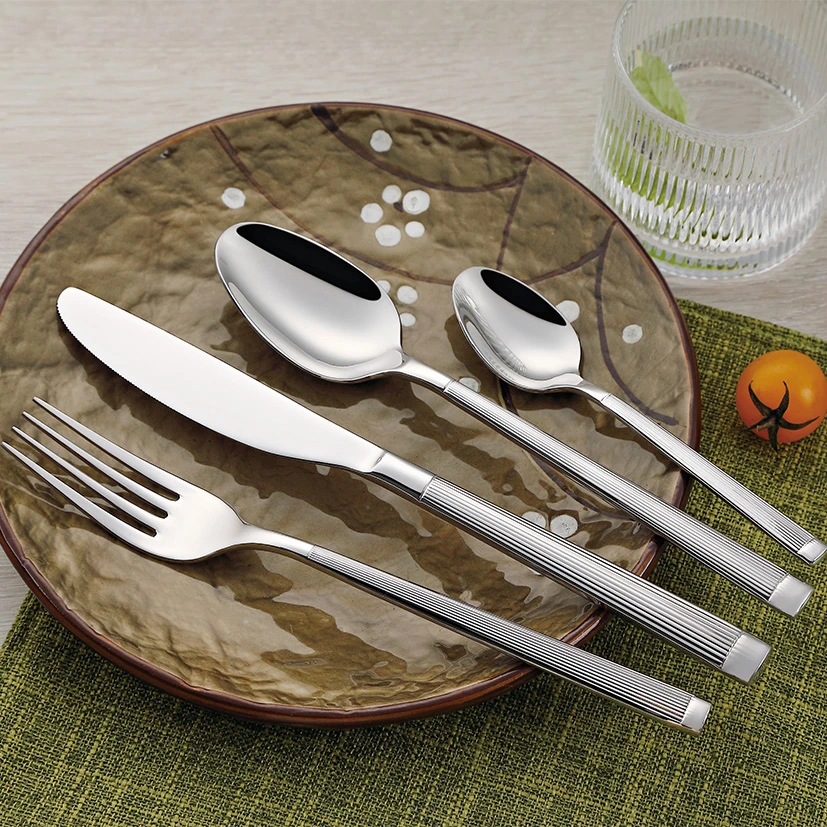
The Silent Workhorse of Your Kitchen
We’ve all experienced it: the knife that bends like a paperclip when you try to stab a cold steak, the fork with tines that feel like blunt instruments, or the spoon that leaves a metallic taste on your tongue. High quality cutlery—or flatware—is often overlooked during a kitchen setup. Yet, it is the one thing we touch every single day, multiple times a day.
Investing in a good set isn’t just about aesthetics; it’s about ergonomics, durability, and the joy of eating. But with thousands of options available online and in stores, how do you separate the heirlooms from the junk?
Here is the roadmap to finding the perfect set of cutlery that will feel good in your hand and last for decades.
1. The Golden Rule: Understand “18/10” Stainless Steel
If you remember only one thing from this guide, let it be this: look for 18/10 stainless steel.
Cutlery is generally made from stainless steel, which is an alloy of steel, chromium, and nickel.
-
18 refers to the percentage of chromium (18%). This is essential for rust and corrosion resistance.
-
10 refers to the percentage of nickel (10%). Nickel is what gives cutlery its luster (shiny, mirror-like finish) and makes it incredibly durable and non-reactive.
You will often see cheaper sets labeled as “18/0” or “13/0.” These contain no nickel. While they are magnetic and often cheaper, they are prone to rusting in the dishwasher and tend to feel lighter and less substantial. If you want cutlery that survives the dishwasher without spotting or pitting, 18/10 is the industry standard for quality.
2. Weight and Balance: The “Hand Feel” Test
High quality cutlery should feel like an extension of your hand, not a heavy club or a flimsy piece of tin.
When evaluating a set (if possible in-store, or by reading detailed specs online), pay attention to the weight distribution. A good knife should not feel “handle-heavy” or “blade-heavy.” It should balance perfectly at the bolster (the thick area between the handle and the blade).
A common misconception is that heavier equals better. While cheap cutlery is often too light, ultra-heavy cutlery can be uncomfortable for everyday use. Look for a medium to heavy gauge steel (thickness). Quality flatware usually has a gauge thickness of 2.5mm to 3.5mm. If the description doesn’t list the gauge, it is likely too thin.
3. Forged vs. Stamped: The Manufacturing Difference
This is a critical distinction that separates high-end cutlery from standard department store sets.
-
Stamped Cutlery: These are cut from a large sheet of steel like a cookie cutter. They are uniform in thickness, usually lighter, and more affordable. While they can be decent quality if the steel is good (18/10), they lack the heft and strength of forged options.
-
Forged Cutlery: These are made from a single bar of red-hot steel that is hammered, cut, and ground into shape. Forged knives and forks have a bolster—the thick ridge between the handle and the utensil head. This adds significant weight, balance, and structural integrity. Forged cutlery is the hallmark of high quality.
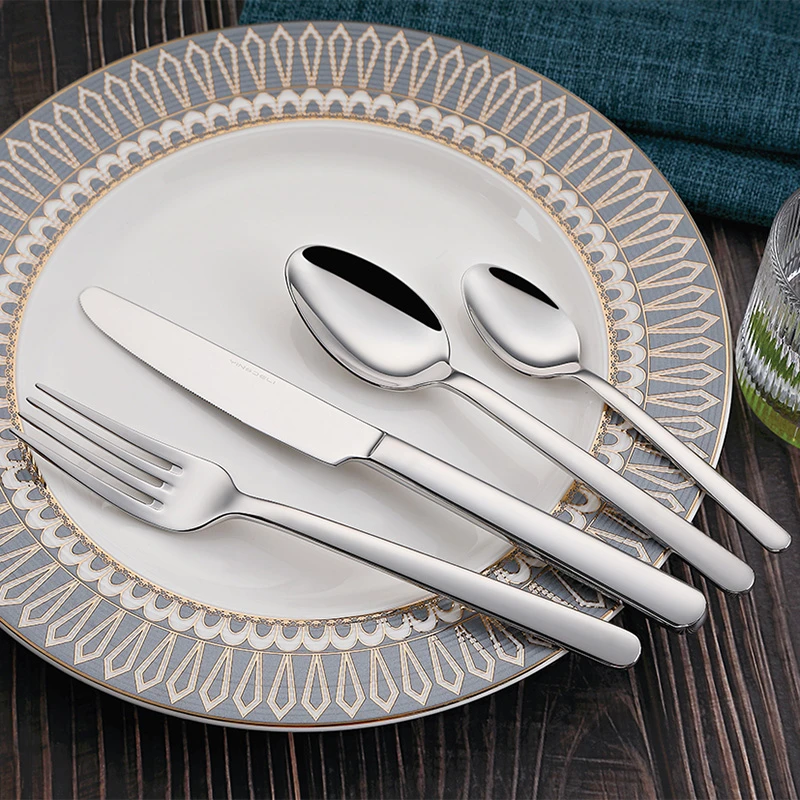
4. The Handle: Seamless Construction is Key
One of the biggest failure points for cutlery is the handle. Cheap sets often have hollow handles that are welded onto the utensil head, or they use plastic/rubber inserts that trap water and bacteria.
For the highest quality:
-
Look for one-piece construction. The knife, fork, or spoon should feel like a single, solid piece of metal.
-
Avoid crevices. Handles should be smooth and seamlessly attached. If you see a gap where the handle meets the utensil head, water will get inside during washing, leading to rust from the inside out.
5. The Finish: Mirror vs. Satin
The finish is largely aesthetic, but it does affect maintenance.
-
Mirror Finish: Highly polished and shiny. It shows water spots and fingerprints easily but is classic and elegant.
-
Satin/Matte Finish: Brushed to a soft sheen. This finish is much more forgiving; it hides scratches and water spots better, making it ideal for busy families who run the dishwasher daily.
Regardless of the finish, ensure the edges are smooth. Run your finger along the sides and between the tines of the fork. High quality cutlery will have no rough seams or sharp edges.
6. The Dishwasher Dilemma
While high quality 18/10 stainless steel is technically “dishwasher safe,” if you truly want your cutlery to last a lifetime, hand washing is recommended. Harsh dishwasher detergents and high heat can eventually dull the finish and cause “pitting” (small rust spots) over the course of decades.
However, if you are a dedicated dishwasher user, opt for 18/10 and avoid sets with glued-on handles or wooden components. Also, ensure you are not mixing stainless steel with non-stainless metals in the dishwasher basket, as this can cause a chemical reaction that leads to rust.
High quality cutlery is an investment in your daily ritual. By choosing solid materials, proper weight, and seamless construction, you will never have to worry about bending a knife on a tough steak or spotting rust on your spoons again. Choose wisely, and the set you buy today will still be on your dining table for your grandchildren.