Introduction
Few things are more frustrating than pulling a beautiful set of cutlery out of the drawer, only to find it covered in dull gray spots, rainbow stains, or—worst of all—rust. Tarnish is the enemy of elegant dining, but the good news is that not all cutlery tarnishes. In fact, with the right material, your flatware can look as brilliant decades from now as it did on day one.
Why Does Cutlery Tarnish?
Tarnish is a chemical reaction between the metal and its environment. For silver and silver‑plated cutlery, exposure to sulfur in the air (or in foods like eggs and onions) creates a black or yellowish film. For lower‑grade stainless steel, moisture, salt, and acidic foods can cause oxidation that looks like rust or “pitting.” Understanding this reaction is the first step to choosing cutlery that stays beautiful.
The Tarnish‑Free Champions
1. 18/10 Stainless Steel – The Gold Standard
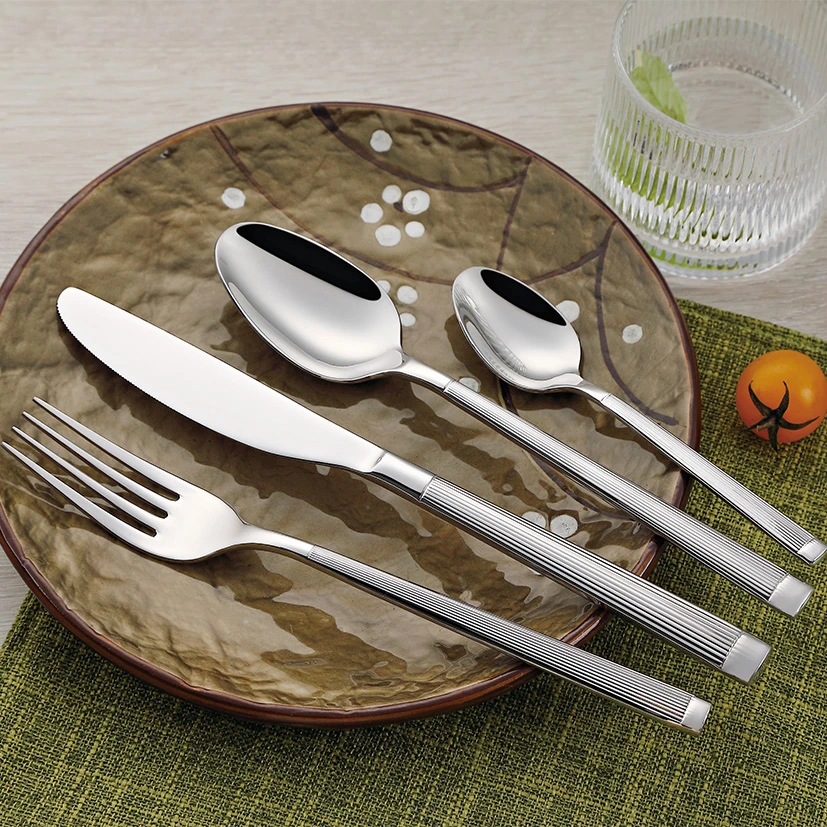
If you want cutlery that absolutely does not tarnish, 18/10 stainless steel is your safest bet. The “18” stands for 18% chromium, which forms a passive layer that blocks corrosion; the “10” stands for 10% nickel, which adds a mirror‑like shine and extra protection against acids and moisture. High‑quality 18/10 flatware is dishwasher safe, resistant to rust, and will never require polishing to remove tarnish—because tarnish simply does not form.
2. 18/8 Stainless Steel – Almost as Good
18/8 stainless steel contains 18% chromium and 8% nickel. It is very similar to 18/10 in appearance and durability. Under normal use, it will not tarnish. The only minor difference is that 18/8 may be slightly less resistant to highly corrosive environments (like prolonged saltwater exposure), but for everyday dining, it is a perfectly tarnish‑free option.
3. Titanium – The Modern Performer
Titanium cutlery has gained popularity among campers and minimalists, and for good reason. Titanium is completely inert—it will not react with food, salt, or acids. It never rusts, never tarnishes, and is incredibly lightweight yet strong. The only caveat is that it often has a matte, gunmetal‑gray appearance rather than a bright silver shine, which some people prefer and others do not.
4. Ceramic or Porcelain Coated – A Different Approach
For those who want color or a completely non‑metallic surface, ceramic‑coated cutlery is an option. The base is usually aluminum or stainless steel, covered with a baked‑on ceramic layer. As long as the coating remains intact, there is no metal exposed to tarnish. However, if the coating chips, the underlying metal may become vulnerable. For pure tarnish resistance with a modern twist, this is a viable choice.
What About Sterling Silver?
Sterling silver (92.5% silver) is beautiful and traditional, but it does tarnish. In fact, it is the metal most notorious for tarnishing. Silver requires regular polishing with special creams or cloths to remove the black sulfide layer. If you are looking for “set it and forget it” cutlery that never needs maintenance, sterling silver is not the answer—no matter how elegant it looks.
How to Identify Tarnish‑Resistant Cutlery
When shopping, look for these markers:
-
Stamped markings: “18/10,” “18/8,” or “304” (the equivalent grade for 18/8) on the back of the handle.
-
Magnetic test: 18/10 and 18/8 stainless steels are non‑magnetic or weakly magnetic. If a fork strongly attracts a magnet, it likely has low nickel content and may tarnish.
-
Finish: Mirror‑finished 18/10 stainless steel actually resists tarnish better than brushed finishes because the dense surface leaves fewer micro‑crevices for corrosion to start.
Care Tips to Prevent Tarnish
Even with tarnish‑resistant metals, proper care extends their life:
-
Rinse cutlery immediately after contact with acidic foods (tomatoes, vinegar, citrus) or salt.
-
Avoid leaving wet cutlery piled in the sink; dry it before storing.
-
If using a dishwasher, ensure the cutlery is made of 18/10 stainless steel and avoid mixing with non‑stainless metals in the same basket, which can cause galvanic corrosion.
Conclusion
If your goal is cutlery that never tarnishes, forget silver and look for high‑nickel stainless steel (18/10 or 18/8) or titanium. These materials offer lasting beauty with minimal maintenance, allowing you to enjoy your flatware without the chore of polishing. A well‑chosen set made from these metals will not only resist tarnish—it will remain a pleasure to use for a lifetime.